Home Insurance 101: Understanding Your Deductible and Replacement Cost

Opening your annual home insurance renewal notice can sometimes feel like opening a surprise bill you didn't ask for. You scan the pages, see the numbers have shifted, and wonder, "What exactly am I paying for here?"
If you’ve noticed your premiums creeping up lately, you aren’t alone. Between the rising cost of lumber and the unpredictable Ohio weather: from Clintonville downpours to those sudden spring windstorms: the insurance landscape in 2026 is more volatile than ever.
At Rise Insurance, we believe that understanding your policy shouldn't require a law degree. We’re here to pull back the curtain on two of the most critical parts of your home insurance coverage: your deductible and your replacement cost. When you understand how these two work together, you can stop worrying about the "what-ifs" and start feeling confident that your family’s sanctuary is truly protected.
The Gatekeeper: Understanding Your Deductible
Think of your deductible as your "skin in the game." It is the amount you agree to pay out of pocket before your insurance coverage kicks in to handle the rest of a claim.
Historically, most homeowners in Ohio had a simple "flat" deductible: usually $500 or $1,000. But as the market has shifted, deductibles have become a bit more nuanced. It’s no longer just one number; it’s often a strategy.
The Two Types of Deductibles You’ll See in Ohio
In today’s market, you’re likely to see two different styles of deductibles on your policy:
Flat Dollar Deductibles: This is the traditional fixed amount (e.g., $1,000 or $2,500). If you have $10,000 in fire damage, you pay your $1,000, and we (via the insurance carrier) pay the remaining $9,000.
Percentage Deductibles: This is increasingly common for Wind and Hail coverage in Ohio. Instead of a flat dollar amount, your deductible is a percentage (often 1% or 2%) of your home’s total insured value.
Crucial Warning: If your home is insured for $400,000 and you have a 2% wind/hail deductible, your out-of-pocket cost for a new roof after a storm would be $8,000. That is a significant jump from a standard $1,000 flat deductible!

Why Choosing the Right Deductible Matters
Choosing a higher deductible is a popular way to lower your monthly premium. It tells the insurance company, "I'll take on more of the small risks myself." However, you have to balance that monthly savings with your "worst-day" reality.
Higher Deductible: Lower monthly payments, but you need more cash in your emergency fund.
Lower Deductible: Higher monthly payments, but less financial stress when a pipe bursts or a tree limb falls.
We always recommend choosing a deductible that you can realistically afford to pay tomorrow if disaster strikes. If a $5,000 deductible would force you to take out a high-interest loan, it might be worth paying a little more each month for a lower out-of-pocket limit.
The Restorer: Replacement Cost Value (RCV) vs. Actual Cash Value (ACV)
If the deductible is the "gatekeeper" of your claim, the Replacement Cost Value (RCV) is the "restorer." It determines how much money you actually receive to rebuild your life.
This is where many homeowners get caught off guard. There are two primary ways an insurance company calculates the value of your property:
Actual Cash Value (ACV): This is essentially the "garage sale" value. It takes the cost to buy the item new and subtracts depreciation (wear and tear). If your 10-year-old roof is destroyed, ACV only pays you what a 10-year-old roof is worth today, which isn't much.
Replacement Cost Value (RCV): This is the "Amazon" value. It pays to replace your damaged items or rebuild your home with new materials of like kind and quality at today’s prices, regardless of how old they were.

Why RCV is the Gold Standard
Imagine a fire destroys your living room furniture. Under ACV, your five-year-old sofa might only be worth $200 because of its age. Good luck finding a high-quality replacement for $200!
With RCV, the policy pays the cost to go out and buy the same sofa (or a similar one) at today’s retail prices. At Rise Insurance, we always advocate for RCV on both your dwelling and your personal property. In a volatile economy where the price of a couch or a bundle of shingles can jump 20% in a year, RCV is your best defense against inflation.
Why 2026 is a "Wild West" for Ohio Homeowners
You might be asking, "Why is everyone talking about insurance right now?" The truth is, the insurance industry is facing a "perfect storm" of factors that affect your policy:
Construction Costs: Labor and materials costs in Ohio have surged. Rebuilding the same house you bought five years ago costs significantly more today.
Weather Patterns: Ohio has seen an increase in "convective storms": those fast-moving, high-intensity wind and hail events. This has led many carriers to mandate those percentage deductibles we mentioned earlier.
Market Volatility: Some national carriers are pulling back from certain areas or raising rates significantly to offset rising costs.
Because of this, your "Replacement Cost" estimate needs to be updated regularly. If your home is still insured for 2021 prices, you might find yourself under-protected if you ever had to rebuild from the ground up.
The Clintonville Advantage: Local Expertise for a Personal Plan
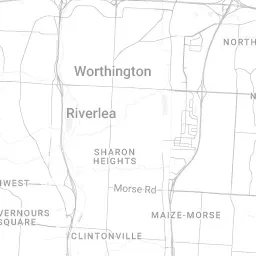
Whether you live in the heart of Clintonville, the quiet suburbs of Worthington, or anywhere across the great state of Ohio, your home is likely your largest financial asset. You shouldn't trust its protection to a "1-800" number or an algorithm that doesn't understand our local neighborhoods.

Our approach at Rise Insurance is different. We live and work where you do. We know that a house in Old North Columbus has different insurance needs than a new build in Delaware. We use the latest industry tech to scan multiple providers, finding the sweet spot where your deductible is manageable and your replacement cost is accurate.
Your Ohio Homeowner Checklist
Not sure if your current policy is up to the task? Take five minutes to look at your "Declarations Page" and check for these three things:
Check your Wind/Hail Deductible: Is it a flat dollar amount or a percentage? Calculate exactly what that percentage equals in dollars so there are no surprises.
Verify RCV on Contents: Does your policy cover your "Personal Property" at Replacement Cost or Actual Cash Value? (Hint: You want RCV!)
Review your Dwelling Limit: Does the "Coverage A" amount seem realistic for rebuilding your entire home at today's labor and material rates?
Let’s Make Sure You’re Covered: On Your Best and Worst Days
Insurance can feel complicated, but it’s really just a tool to give you peace of mind. You’ve worked hard for your home; let’s make sure the plan protecting it is as solid as the foundation it's built on.
If you’re feeling unsure about your current limits or just want a second pair of eyes to look over your renewal, we’re here to help. You can schedule a virtual meeting, stop by our Clintonville office for a coffee and a chat, or simply request a quote online to see how we can raise the bar for your coverage.
Don't wait for the next storm to find out what's in your policy. Reach out to us today, and let’s build a protection plan that actually fits your life.
