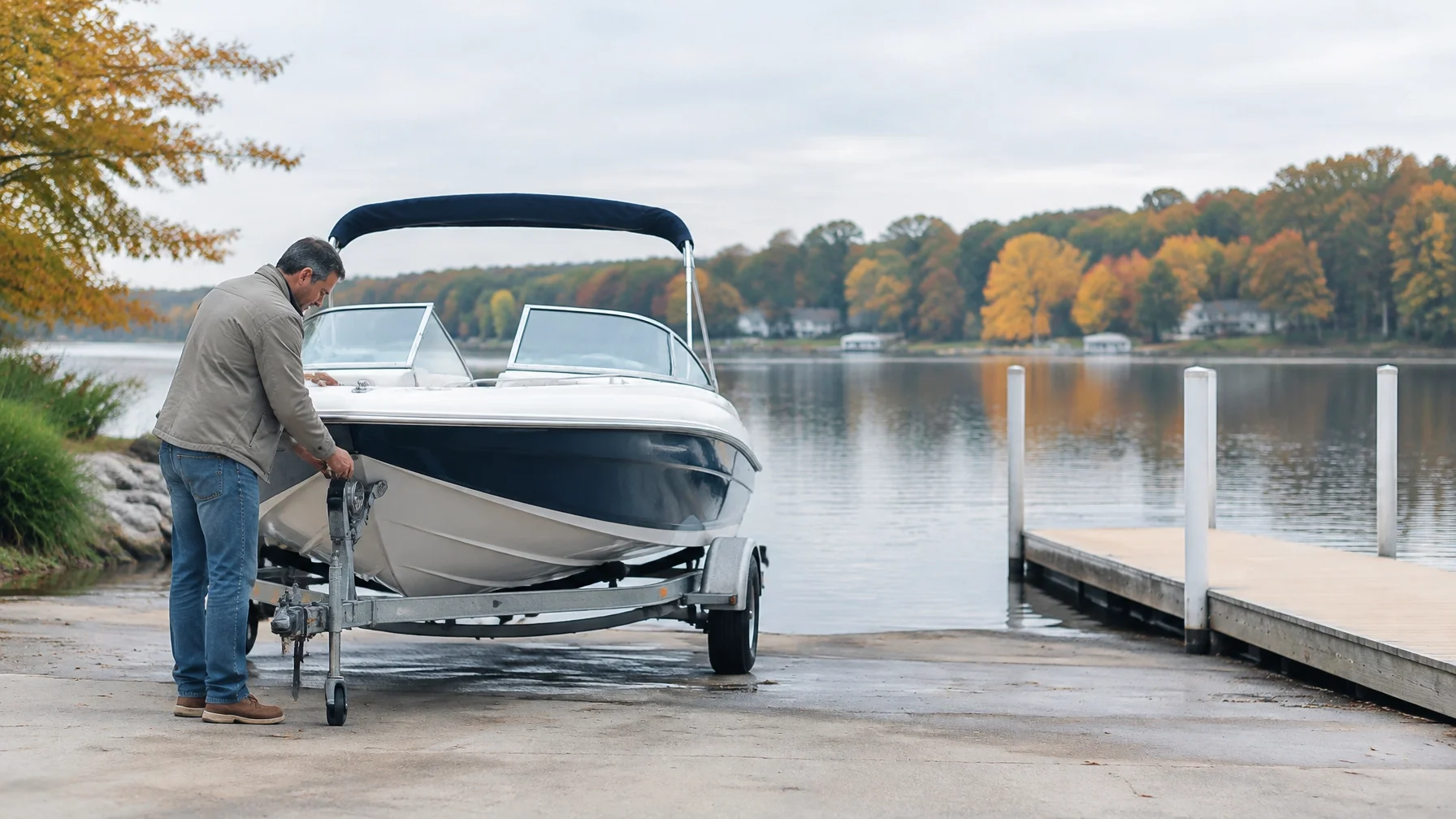
In late September, an Ohio boat owner may be looking at one more weekend on the water before hauling the boat from a Central Ohio lake or marina. Moving it to a trailer, storage yard, or garage affects more than the winterization checklist.
It can also affect how your insurance responds to theft, weather damage, liability, equipment loss, and trailer-related problems. A small fishing boat kept at home may have limited treatment under a homeowners policy, while a larger boat or vessel stored at a marina may need separate marine coverage.
Before winter storage, review where the boat will be kept, how it is used, and what your policy says. Winterization helps protect the boat, but maintenance does not create insurance coverage.
Why boat insurance in Ohio deserves a separate review
Homeowners insurance generally protects your home, belongings, and certain liability exposures, subject to the policy terms, limits, exclusions, and deductibles. Some policies may provide limited coverage for a small boat, but that treatment may not be enough for every boat or use.
Ohio law does not require boat insurance, although marinas, lenders, or storage providers may have their own requirements. The Ohio Department of Natural Resources’ boat registration FAQ addresses the question directly. Whether a homeowners policy helps with a boat depends on the policy. The NAIC’s property insurance guidance notes that liability coverage on small sailboats and smaller powerboats may be available, while larger vessels are commonly excluded and personal watercraft will likely require a separate boat policy.
A separate boat policy may be designed to address exposures a homeowners policy does not fully address, such as damage to the hull, motor, attached equipment, or other covered components; liability for injuries or property damage involving the boat; towing or assistance, if included in the policy; trailer damage or theft, if included and covered; personal property kept aboard; and storage-related risks at a marina, yard, or other approved location.
Coverage is not automatic simply because you own a boat or a homeowners policy. A carrier may apply different rules to a canoe, fishing boat, pontoon boat, sailboat, personal watercraft, or larger powered vessel, and the policy may define where the boat can be used.
For a small boat used occasionally on an inland lake, your homeowners policy may be part of the discussion. You can review possible homeowners-policy treatment and broader household coverage through Rise Insurance’s home insurance page, but do not assume it provides the same protection as a boat policy.
Start with the storage location and winter use
The boat’s off-season location matters because the risk changes when it leaves the water. A vessel stored at a marina may face different concerns than one kept on a trailer in a driveway or inside a private garage.
Before haul-out, confirm that your policy addresses the intended arrangement. Coverage may depend on whether the boat is:
Stored indoors at a marina, warehouse, or private building
Kept outdoors in a storage yard or residential driveway
Covered and supported on a trailer
Left at a dock or mooring for part of the colder season
Moved between your home, a marina, and a repair facility
A storage contract may require proof of insurance or limit the marina’s responsibility for theft, weather, fire, or damage during storage. Read it alongside your policy before delivery.
Also review any lay-up or seasonal-use language. Some policies may limit operation during an identified period, while others may continue certain coverage during storage. If you plan to use the boat in an unusually warm fall or early spring, make sure that use does not conflict with the policy’s dates, navigation territory, or storage conditions.
Review physical damage, liability, and equipment
Physical-damage coverage generally addresses accidental damage to the insured boat and covered equipment. Liability coverage generally addresses your legal responsibility for injuries or property damage to others. Each section may have its own limits, exclusions, conditions, and deductible. Review these areas before storage.
Physical damage and valuation
Check whether the policy uses an agreed value, actual cash value, or another method. Actual cash value generally accounts for depreciation when determining the value of covered property at the time of loss. Other valuation provisions may apply depending on the boat’s age, condition, and value.
Make sure the listed boat, motor, attached equipment, and stated value still match what you own. A replacement motor, upgraded electronics, new trailer, or other improvement may require a policy update.
Liability
Boat liability may apply to incidents involving guests, swimmers, other vessels, docks, or nearby property, subject to policy terms and limits. Review whether the limit fits how you use the boat and who you typically invite aboard.
A personal umbrella policy may provide additional liability protection above underlying policies if its requirements are met, though it may have restrictions involving watercraft size, horsepower, ownership, or use. Do not assume umbrella coverage applies without confirming the details.
Personal property and safety equipment
Fishing equipment, portable electronics, water-sports equipment, life jackets, and other items may not all be treated the same way. Some may have separate limits, while others may be excluded or covered only under certain circumstances.
Before storage, make a list of valuable items remaining aboard, and ask whether removing them is recommended and how the boat or homeowners policy treats them indoors.
Towing, salvage, and pollution-related exposures
Depending on the policy, optional coverage may be available for on-water towing, salvage, wreck removal, or certain pollution-related responsibilities, especially for boats used on larger lakes, rivers, or busy waterways. Availability and scope vary, so review them based on your boat, navigation area, and storage arrangements.
Prepare the boat and trailer for an Ohio winter
Winterization may reduce the chance of freeze damage, corrosion, and moisture problems, but it does not guarantee that an insurer will cover every resulting loss.
Follow the manufacturer’s instructions or use a qualified marine professional when the process is beyond your experience. Review:
Removing water from bilges, plumbing, livewells, washdown systems, and other areas that can hold moisture
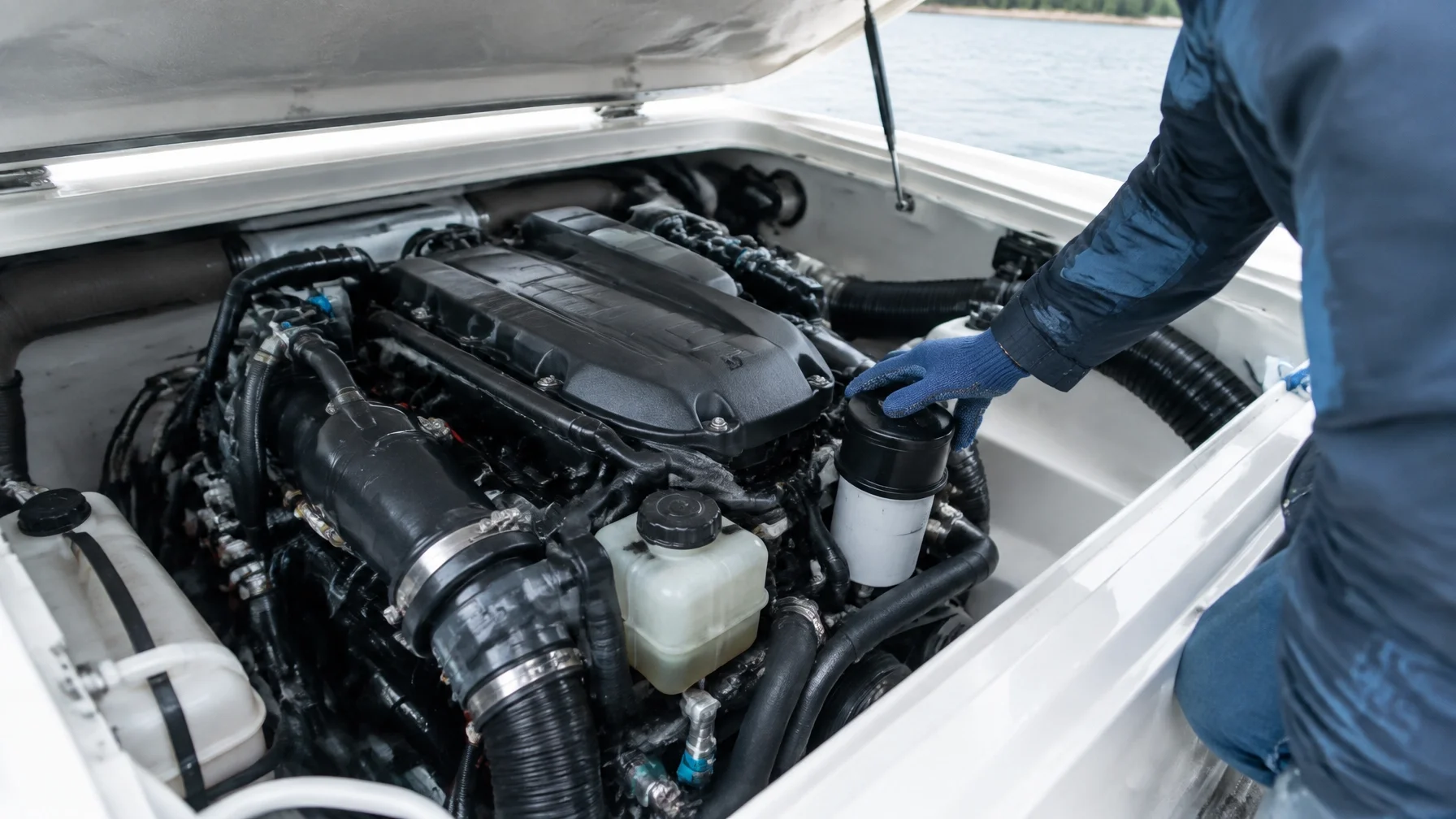
Protecting engine and cooling systems according to the manufacturer’s recommendations
Addressing fuel, oil, batteries, and other systems using appropriate procedures and products
Cleaning and drying the interior to reduce mildew and moisture damage
Removing portable electronics, valuables, and equipment that could be stolen or damaged by cold and damp conditions
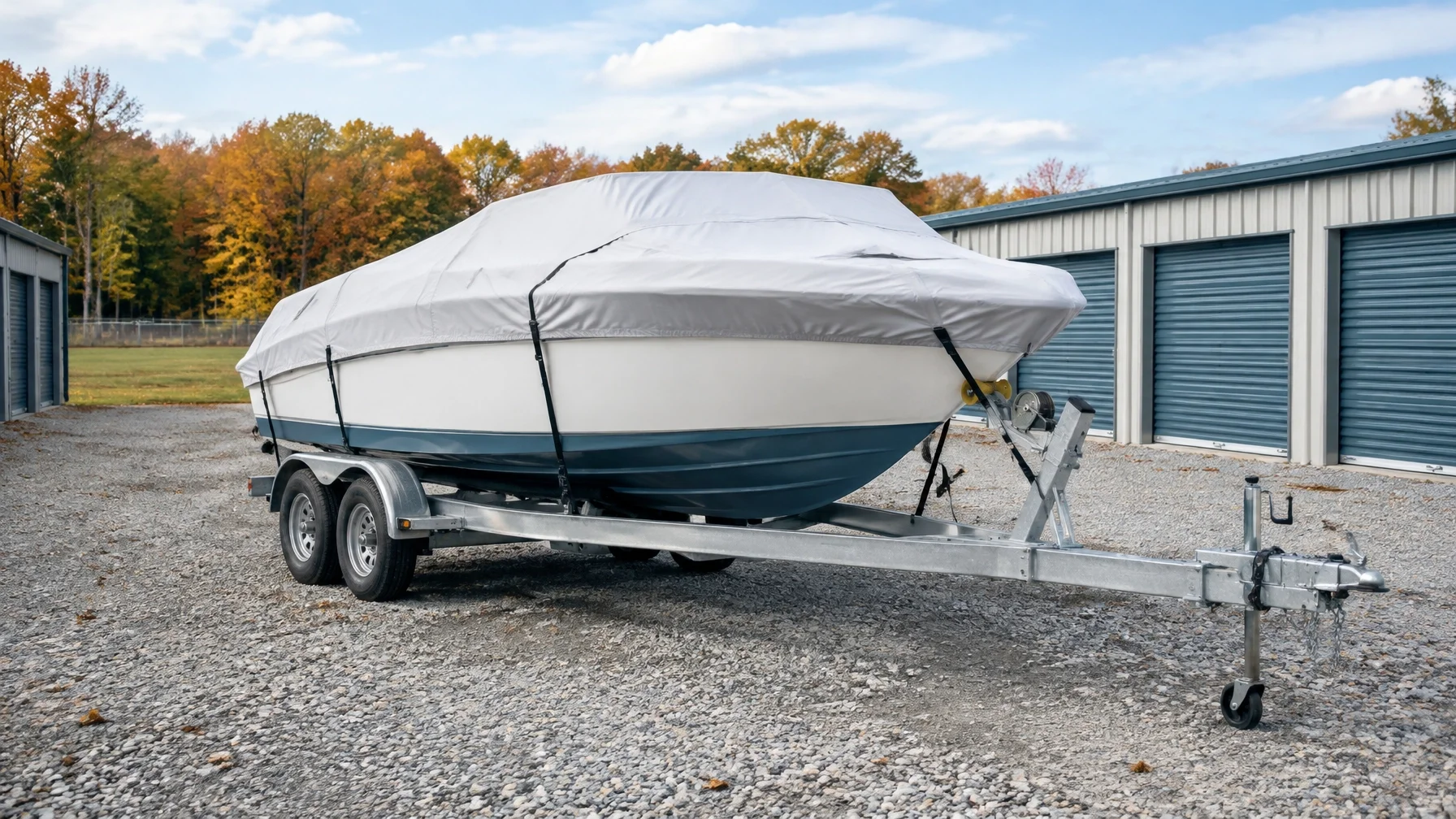
Installing a properly supported cover that allows appropriate ventilation
Positioning the boat and trailer on stable surfaces away from falling branches and other avoidable hazards
The trailer deserves its own review: tires, lights, wheel bearings, hitch components, straps, and security devices. Confirm whether it is insured under the boat policy, an auto policy, or another arrangement, since coverage can differ when it is attached to a vehicle, parked at home, or left at a storage facility.
If a marina or technician performs the winterization, keep the invoice. Documentation does not override policy language, but it can help you track maintenance.
Document the condition before closing up
Take clear photographs of the boat, motor, trailer, equipment, and storage setup before winter, including identifying details, upgrades, the cover, supports, and locks. Keep receipts for winterization, repairs, storage fees, and recently purchased equipment.
Create a simple file containing:
The current declarations page and policy documents
The marina or storage contract
Winterization receipts and maintenance records
Photographs of the boat and trailer
Serial numbers or purchase records for major equipment
A list of items removed from the boat for the winter
Review the policy’s reporting requirements as well. If theft, vandalism, weather damage, fire, or another incident occurs, prompt notice may be required, and avoid discarding damaged property before receiving claim instructions unless immediate action is necessary to prevent further damage or protect people.
A fall review is also a good time to confirm your navigation territory and spring launch plans. Use at an inland lake near Columbus may differ from a trip to Lake Erie, and depending on the policy those differences may affect navigation boundaries and coverage.
If you want help organizing the questions before storage, schedule a conversation with Rise Insurance. Rise Insurance is an independent agency that can help you review options and identify questions for the insurance carrier. The carrier issues the policy and handles claim decisions, subject to the policy’s terms, conditions, limits, and exclusions.
